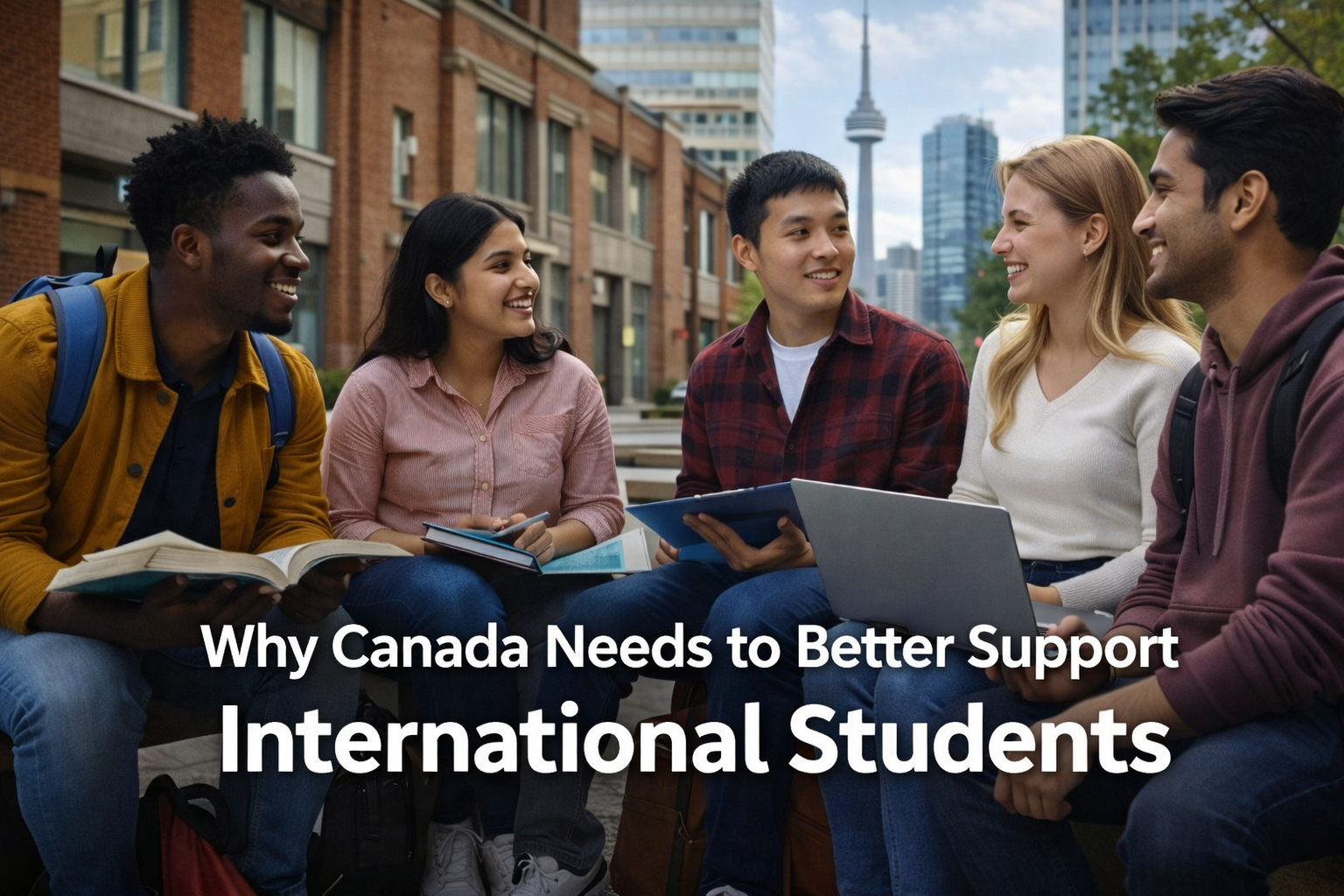
Canada has become one of the world’s most popular destinations for international students, attracting hundreds of thousands each year with promises of quality education, cultural diversity, and a pathway to work and eventual permanent residence. In 2019, the number of international students in the country reached nearly three-quarters of a million, making Canada second only to the United States and Australia in international student enrollment.
But there’s a problem: while Canadian policy has focused on recruiting international students, it has paid far less attention to what happens after they arrive — especially in terms of their experience in school, the labour market, and wider Canadian society. The result is a growing disconnect between policy goals and the lived realities of students pursuing their studies here.
The “Promise” vs. the Reality
International students are supposed to be a key source of future skilled workers. They arrive with educational qualifications, language skills, and an understanding of Canadian society. Yet research shows many struggle after graduation: they tend to earn lower wages than Canadian-born graduates and are less likely than expected to become permanent residents.
One major reason for this gap is that international students — because they hold temporary immigration status — are not eligible for the free settlement services that other newcomers receive. These services, funded by the government, include language training, employment support, community networking, and help navigating life in Canada. With limited access to these supports, many students fall through the cracks.
During their studies, colleges and universities often offer some academic support, but they are not required to provide the kind of comprehensive settlement services that students need to succeed both in school and in work. After graduation, students often lose access to even those limited services — just when they need help the most, especially if they are seeking jobs that match their education or trying to transition toward permanent residency.
The Human and Economic Stakes
This isn’t just about students struggling in isolation. International students contribute massively to Canada’s economy — in 2018, they brought in more than $20 billion in revenue, and institutions have come to rely on their tuition to balance budgets.
Yet from an integration perspective, their potential remains largely untapped. Without the right supports, qualified international graduates are often underemployed or find themselves stuck in low-wage, precarious jobs that don’t reflect their skills or training. This undercuts policy goals around economic growth, workforce development, and attracting global talent.
A Collaborative Solution
To fix this, the policy brief argues we should stop thinking of international students only as recruits and start thinking of them as future residents and workers. That means building a more coordinated model of support that brings together:
- Federal and provincial governments,
- Post-secondary institutions, and
- Settlement service agencies.
Under this proposed model, all three partners would work together to design and deliver services tailored to international students throughout their full journey — from arrival and school integration to finding appropriate work and, eventually, becoming permanent members of Canadian society.
Importantly, accountability would play a role: funding from governments could be tied to institutions’ commitment to providing meaningful support, and services would be delivered in partnership with community settlement agencies that already know how to help newcomers adjust and thrive.
Why It Matters
Reframing international student policy in this way turns a short-term revenue stream into a long-term investment in Canada’s future. When international students are supported — academically, socially, and economically — they are more likely to stay, work, contribute to their communities, and help meet labour market needs that Canadian-born workers alone cannot fill.
In short: attracting global talent is only half the task. Ensuring their success is where Canada’s real return on investment lies.
Click here to read the full policy breif: https://www.torontomu.ca/cerc-migration/Policy/CERCMigration_PolicyBrief08_AUG2022.pdf